Popular Profiles: Caliza's Neto Acosta on why solar should sell the maximum, not the minimum
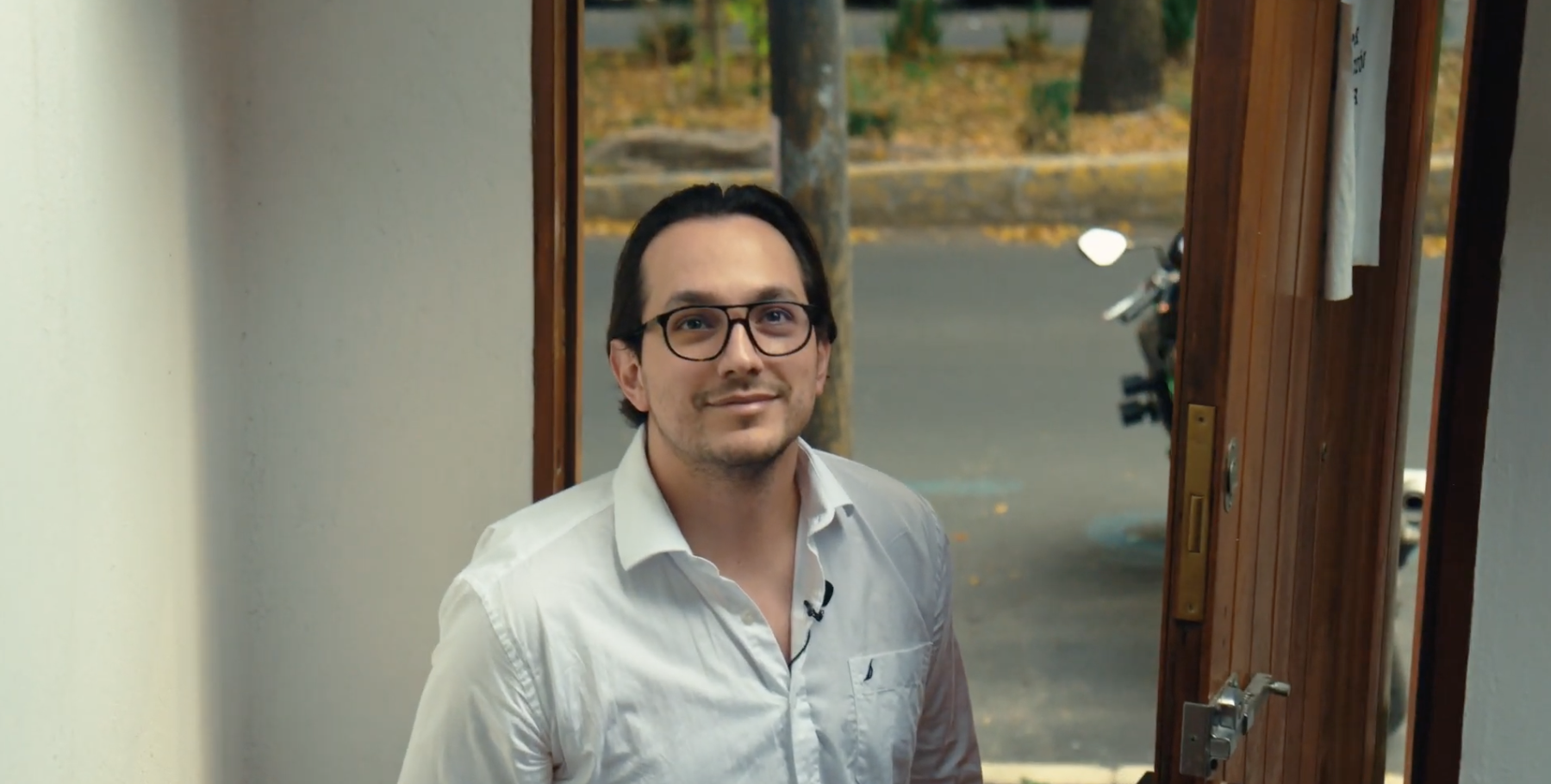
In 2016, Ernesto “Neto” Acosta founded Caliza on a conviction most of the solar industry avoids: that construction and maintenance are the whole game, not the afterthought. Ten years and nearly 100,000 panels later, he runs one of Mexico's most respected EPCs, with 324 sites and 25.24 MWp under management on Popular Power and a fleet in the top quintile of performance in the country. This is his case for a different standard — one where a maintenance provider stops guaranteeing a minimum of 92% and starts selling the maximum a system can actually produce, and where Mexican companies, not foreign entrants, get to build the country's solar future.
Caliza shares their role in building Mexico's solar future
How Ernesto “Neto” Acosta built one of Mexico's most respected solar EPCs by treating construction and maintenance as the whole game, and why he says the future of energy is popular.
A while back, someone on Neto Acosta's team asked him a simple question: when did you realize Caliza had become Caliza?
“I told him I think I still haven't realized it,” he says. “Because the ambition is always to go further.” It is a revealing answer from the founder of a company that, by most measures, has already arrived, with nearly 100,000 panels installed across Mexico and a client list that reads like a directory of the country's most demanding buyers: Fibra Danhos, PPG/Comex, La Costeña, Energía Real. Neto spends more energy on what Caliza can still do better than on what it has already built. “If we're already at this level and we're this clear about what's missing,” he tells his team, “when we get there, there'll be no way for anyone to compete with us.”
An engineer who wanted the harder problem
Neto was in the first graduating class of Tec de Monterrey's sustainable-development engineering program. He knew he wanted to work in energy, and he pictured the big wind and solar farms from the Discovery Channel documentaries. But the closer he looked at utility-scale, the less it clicked. Even a solar mega-project carries real local and environmental impact: land, permitting, disruption. On-site energy made more sense to him. Industrial parks had already transformed their land, and their rooftops were sitting empty, so in 2016, with a few partners, he founded Caliza.
The name is not an accident. Caliza means limestone, the stone farmers in the Andes once used to build microclimates, absorbing the sun's heat by day to keep potato crops warm through the cold night, the same stone that warms French vineyards. “One stone does nothing,” Neto says. “A set of stones lets a potato grow in the Andes, or a vine grow in France.” Caliza began as a crowdfunding idea, many small contributions doing together what none could do alone, and the through-line never left: energy, democratized.
The part of the business nobody wants
Caliza's first model, crowdfunded solar for private schools, did not work, and they found that out within a couple of months. They sold the portfolio they had built to a specialized energy fund and rebuilt the company around what the market actually needed: someone who could develop, design, build, and operate clean-energy projects well.
That last word is where Neto plants his flag. “In this sector, nobody wants to do construction or operation,” he says. “Maintenance gets treated as a necessary evil.” The industry's incentives point the other way, since it is easy to sell a solar system. “Installing it well is the next challenge. And operating it well is the one after that.” Most companies sell the system and move on, which is why, by Neto's account, so many commercial and industrial systems in Mexico run at 70% of their capacity, drained by inverter faults, bad connections, and dirt no one is watching for.
Caliza was built on the opposite instinct. It started life financing and owning assets, selling energy rather than hardware on ten-year contracts, and that DNA survived the pivot to construction. Every Caliza contract still carries a generation guarantee. “Not because we're environmentalists or idealists,” Neto says, “but because we understand it's good business. We want the people who trusted us to keep trusting us. If we sold 100,000 panels, we have to make sure those 100,000 panels operate well for the next 20 years.”
Selling the maximum
Neto thinks one shift can reset the whole category. Maintenance in Mexico, he says, is sold as a floor: the provider guarantees a minimum, often around 92% of what a system could produce, and everyone settles for it. “We should be selling the maximum potential, not the minimum possible,” he says. “Instead of telling a client, ‘I guarantee you a minimum of 92%,’ I'll guarantee that minimum, but I'll sell you the 110%.”
Doing that requires seeing the asset clearly, and that is the role Popular Power plays. Basic monitoring, Neto explains, only tells you when something has already broken. “It doesn't tell you how far below your potential you're running.” Before Popular Power, Caliza would discover a badly soiled array two or three months late, after the losses had already stacked up. “With Popular Power, you can catch it in the first week. Knowing in real time that you're leaving potential on the table, that, in short, is what creates the value.”
For Caliza, this is more than theory. Across the 324 sites it manages on Popular Power, the fleet ran at 107.5% of its contractual target last month and 102.2% of what the weather itself would allow, placing Caliza in the top quintile of solar performance in Mexico.
That visibility now lets Caliza, alongside a program with Bodegas Alianza, build something the Mexican market has rarely seen: a maintenance model where Caliza takes on the generation risk itself, on its own installations and on systems built by others, and proves the value of maintenance to the client in hard numbers. “Popular Power is going to let us create a new business model in this country,” Neto says. “It lets us give the client a guarantee that we won't just generate a minimum, we'll generate a maximum. And that can only be done with real-time data.”
By the Numbers
The Caliza portfolio on Popular Power
324 sites under management, 100% in Mexico
25.24 MWp installed and monitored, with a fleet still growing (sites online from 2017 through 2026)
78% of the portfolio on active O&M — Caliza operating what it builds
Last month: 107.5% of target, 102.2% of climate-adjusted potential (kWp-weighted) — comfortably above the 100% commitment line
Trailing 60 days: 107.2% / 102.1% — steady across two months
Top quintile of solar performance in Mexico
Who builds it
Ask Neto what “the best EPC in the country” means, and his answer is about the work itself. “It's going to sound corny,” he says, “but it's the company that enjoys building.” An industry that treats field work as a burden to offload will always do it poorly; Caliza's bet is that well-trained, well-paid people, working on well-sold projects, turn execution into something to be proud of. Dignify the installation and the labor, he argues, and the quality follows.
He frames the stakes nationally. Solar in Mexico, he says, is inevitable: “no matter what, it's coming to the whole country.” The only real question is who builds it. If Mexican firms fall short of the bar of safe sites, clean execution, and assets that actually deliver the savings that were promised, the work will go to larger foreign companies that arrive when the market is hot and leave when it cools. “The failure, for the Mexican sector, would be to hand that business to someone else.” Popular Power, in his telling, is how Mexican hands scale while keeping quality high: “the element that lets us technify construction and maintenance, that lets us become an AI company in solar energy.”
The Future of Energy is Popular
Neto keeps his own reasons close. A poem attributed to Tecumseh, “live your life so that when death comes, you're not one of the cowards begging for more time,” is part of what pushed him to start. Ten years in, he measures success in permanence. “In ten years, I'd like to go back and see the first system we ever installed, and find it still running well,” he says. “To have built infrastructure that generates energy, that helps the planet and helps a country, I'd feel a lot of peace knowing I did that with my life.”
When the interviewer asks him to finish the sentence, the future of energy is ___, he takes his time. “I think the future of energy is popular,” he says. “Not popular as in famous. Popular because it belongs to the people. Solar democratizes energy. It gives people back control over their own power.” Then, almost as an afterthought, he adds the line that ties it together: “And I think it's going to be with Caliza, too.”
The best solar companies are Popular Powered.
__
About Popular Profiles
The energy transition isn't an abstraction or a policy target. It's about people. It's a founder who taught himself to install solar on his own roof fifteen years ago and turned it into a company, driving between sites and answering his customers' calls himself. It's a visionary executive who refuses to promise a client the minimum when the system is capable of far more. Popular Profiles is a series of short films about the people building our solar future: what drives them, what they've risked, and why their work matters long after the panels go up.
It's our honor to showcase these individuals driving the energy transition forward for you, for me, and for our communities. Because the best solar companies deserve to be seen. Because their stories are the most honest picture for where our energy future is headed. Each profile follows one founder as they share their vision and inspiration in their own words and in their own element. Behind each of them is the intelligence to turn that conviction into scale — because the future of energy is Popular.

.png)